Medical Alcohol Dependency Treatment in South Africa


Overview
Alcohol Dependency in South Africa
Alcohol Use Disorder (AUD) is one of the most prevalent and underdiagnosed conditions in South Africa. The country consistently ranks among the highest globally for per capita alcohol consumption and alcohol-related harm, yet the majority of people living with dependency never receive any formal treatment.
South Africa's disease burden from alcohol is substantial. The South African National Council on Alcoholism and Drug Dependence (SANCA) estimates that alcohol contributes to a significant proportion of road fatalities, domestic violence incidents, and hospital admissions each year.
Critically, AUD is not a moral failing or a lack of willpower. It is a recognised
neurobiological disorder involving dysregulation of the brain's reward pathways — particularly the dopaminergic system — which can be meaningfully addressed with evidence-based medical treatment.
The emergence of GLP-1 receptor agonists (such as semaglutide, sold as Ozempic and Wegovy) has opened a new frontier in addiction medicine. Early clinical evidence and mechanistic studies suggest these medications may reduce cravings for alcohol through pathways shared with appetite and reward suppression. Combined with established treatments like naltrexone and acamprosate, South Africans now have more treatment options than ever — including via telehealth.
"Alcohol use disorder is a chronic relapsing brain disorder characterized by compulsive alcohol use, loss of control over alcohol intake, and a negative emotional state when not using."
— National Institute on Alcohol Abuse and Alcoholism (NIAAA), 2021
Understanding Alcohol Dependency
Alcohol dependency exists on a spectrum and manifests in different patterns.
Understanding where you fall helps identify the most appropriate treatment approach.
Alcohol Cravings
Intense urges to drink are driven by changes in the brain's reward circuitry — particularly dopamine, opioid, and glutamate systems. Cravings are a hallmark neurobiological symptom, not a choice. They can be triggered by stress, environmental cues, and emotional states.
Binge Drinking
Defined by the National Institute on Alcohol Abuse and Alcoholism
(NIAAA) as a pattern of drinking that brings blood alcohol concentration (BAC) to 0.08% or higher — typically 4+ drinks for women and 5+ drinks for men within ~2 hours. In South Africa, binge drinking is particularly prevalent among young adults.
Compulsive Drinking
Continued alcohol use despite negative consequences — damaged relationships, health problems, or legal issues. Reflects a shift from goal-directed to habitual behaviour involving the dorsal striatum, and is characteristic of severe Alcohol Use Disorder (AUD).
Dopamine & Reward
Alcohol acutely raises dopamine levels in the nucleus accumbens — the brain's reward centre. Over time, chronic use downregulates dopamine signalling, resulting in anhedonia (inability to feel pleasure) and compulsive use to restore baseline dopamine levels.
Alcohol Use Disorder (AUD)
AUD is a formal clinical diagnosis (DSM-5) characterised by 11 criteria, including craving, loss of control, tolerance, and withdrawal. It ranges from mild (2–3 criteria) to severe (6+ criteria), and all levels can benefit from medical intervention.
Why Medication Works
FDA-approved medications target the neurobiological drivers of AUD — blocking opioid receptors (naltrexone), restoring glutamate balance (acamprosate), or, in emerging research, modulating reward via GLP-1 pathways. Medication combined with support offers the strongest outcomes.
Medical Treatment Options Available in South Africa
Several evidence-based pharmacological treatments are available for AUD in South Africa. Some can be initiated via telehealth, making them accessible without requiring in-person visits to a clinic or hospital.
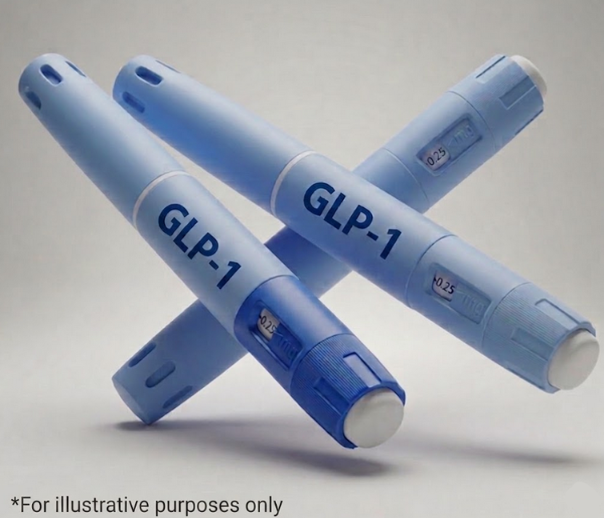
Low-Dose GLP-1 Therapy — Semaglutide (Ozempic / Wegovy)
GLP-1 receptor agonists — a class of medications originally developed for type 2 diabetes and obesity — have attracted significant scientific interest for their potential to reduce addictive behaviours, including alcohol use. Semaglutide (branded as Ozempic for diabetes and Wegovy for weight management) is the most studied agent in this class.
The proposed mechanism relates to GLP-1 receptors expressed in the ventral tegmental area (VTA) and nucleus accumbens — brain regions central to reward and motivation. By modulating dopamine release in these areas, GLP-1 agonists may attenuate the hedonic and reinforcing properties of alcohol, thereby reducing craving intensity and consumption.
🔬 Clinical Evidence — Animal & Early Human Studies
Preclinical studies in rodents have consistently shown that GLP-1 receptor agonists reduce voluntary alcohol consumption. A 2022 study by Klausen et al. demonstrated that semaglutide significantly reduced alcohol intake and binge-drinking episodes in rodent models.
Klausen MK et al. (2022).Semaglutide reduces alcohol consumption in alcohol-preferring rats.JCI Insight, 7(3). doi:10.1172 jci.insight.156656
🔬 Retrospective Human Data
A large retrospective study using electronic health records found that patients prescribed semaglutide for obesity had significantly lower rates of alcohol use disorder diagnoses and alcohol-related hospitalisations compared to matched controls. The association persisted after controlling for BMI and diabetes status.
Hajek P et al. (2024).GLP-1 agonists and alcohol-related outcomes: a retrospective cohort study.eClinicalMedicine, 73.doi:10.1016/j.eclinm.2024.102680
🔬 Ongoing Clinical Trials
Multiple Phase II randomised controlled trials are underway globally investigating semaglutide specifically for AUD. The NIAAA is funding several such trials. Preliminary data from the STAR trial (NCT05769231) suggests that weekly semaglutide significantly reduced heavy drinking days compared to placebo in adults with AUD.
ClinicalTrials.gov. (2023).Semaglutide for Alcohol Use Disorder (STAR trial).NCT05769231.
At Get-Tested.co.za, our registered medical practitioners can assess your suitability for low-dose GLP-1 therapy as part of a comprehensive alcohol dependency treatment programme. This is conducted via our secure telehealth platform.
Important note: GLP-1 therapy for alcohol dependency is off-label and considered emerging — not yet standard of care. It is prescribed on an individual basis following a thorough medical assessment. It is typically used as an adjunct to, not a replacement for, psychological support and behaviour change programmes.
Naltrexone and The Sinclair Method
Naltrexone is an opioid receptor antagonist with robust evidence for reducing alcohol consumption and cravings. It works by blocking the euphoric effects of alcohol at mu-opioid receptors — essentially removing the pleasurable reinforcement that drives continued drinking. Over time, this leads to a process called pharmacological extinction, in which the learned association between drinking and reward is gradually weakened.
The Sinclair Method (TSM) involves taking naltrexone 1–2 hours before drinking rather than as daily abstinence-focused therapy. This targeted approach enables the extinction process to occur while drinking, and clinical data supports significant reductions in consumption over time without requiring immediate abstinence — making it a highly acceptable approach for many patients.
🔬 Clinical Evidence — COMBINE Trial
The landmark COMBINE study — the largest clinical trial of alcohol pharmacotherapy to date — found that naltrexone significantly reduced heavy drinking days (by approximately 25%) and increased the likelihood of achieving good clinical outcomes compared to placebo over 16 weeks of treatment.
Anton RF et al. (2006).Combined Pharmacotherapies and Behavioral Interventions for Alcohol Dependence: The COMBINE Study.JAMA, 295(17):2003–2017. doi:10.1001/jama.295.17.2003
🔬 Sinclair Method Long-Term Outcomes
A Finnish study following patients on TSM for up to 3 years found that approximately 78% achieved either controlled drinking or full abstinence. The Sinclair Method has shown effectiveness in patients who have previously failed abstinence-based approaches.
Sinclair JD. (2001).Evidence about the use of naltrexone and for different ways of using it in the treatment of alcoholism. Alcohol & Alcoholism, 36(1):2–10. doi:10.1093/alcalc/36.1.2
Disulfiram
Disulfiram inhibits aldehyde dehydrogenase, causing an unpleasant reaction (flushing, nausea, palpitations) when alcohol is consumed. It works as a deterrent and is most effective when taken under supervised or directly observed conditions. It is not suitable for all patients and requires careful screening.
🔬 Clinical Evidence
A systematic review found that supervised disulfiram was significantly more effective than unsupervised use, and outperformed placebo in reducing drinking days and maintaining abstinence in highly motivated patients.
Skinner MD et al. (2014).Disulfiram efficacy in the treatment of alcohol dependence: a meta-analysis. PLOS ONE, 9(2):e87366. doi:10.1371/journal.pone.0087366
Online & Telehealth Medical Options in South Africa
Get-Tested.co.za offers confidential, online-first assessment and prescribing for alcohol dependency medications — including GLP-1 therapy and naltrexone — via registered South African medical practitioners. This means you can access treatment from anywhere in South Africa without needing to visit a clinic in person.
Not sure which treatment is right for you?
Our South African-registered doctors can help you understand your options and create a personalised plan — entirely online and in confidence
Non-Medical Treatment & Support Resources in South Africa
Medical treatment is most effective when combined with psychological support and peer community.
The following are key resources available to South Africans. This section is a general guide — links and contact details should be verified directly.
SANCA
SANCA is South Africa's largest non-profit network for addiction treatment and prevention. They offer counselling, treatment referral, and inpatient rehabilitation at centres across all provinces.
Alcoholics Anonymous SA
AA offers free, peer-support group meetings across South Africa — both in-person and online. The 12-step model has helped millions worldwide and provides ongoing community and accountability.
SMART Recovery South Africa
SMART Recovery offers an evidence-based, non-12-step alternative to AA using CBT and motivational enhancement tools. Online and in-person meetings are available.
Motivational Interviewing (MI)
MI is a counselling approach that helps individuals explore and resolve ambivalence about changing their drinking. It is often used in combination with medication-assisted treatment and has strong evidence for AUD.
Private Rehabilitation Centres
South Africa has numerous private inpatient and outpatient rehabilitation facilities offering medically supervised detoxification, individual therapy, group work, and aftercare programmes. These are covered by some medical aids.
Cognitive Behavioural Therapy (CBT)
CBT is the gold-standard psychological intervention for AUD, targeting the thoughts, triggers, and behavioural patterns that sustain drinking. Available via registered psychologists and via teletherapy platforms in South Africa.
→ Find a registered psychologist via HPCSA ↗
Crisis & Emergency Support
If you or someone you know is in crisis, contact the SADAG Substance Abuse Helpline:
0800 12 13 14 (toll-free, 24/7).
For medical emergencies, contact emergency services:
10177 (ambulance)
.
📞 Available 24/7

GET TESTED
Why choose us?

Trusted since 2020
Doctor run service - not led by investment firms

Internationally accredited
3rd party accredited services (HPCSA, Scope, and Legit Script)

Safe & Scientific
Guided by evidence based protocols and best practices
FAQs
Alcohol cravings are driven by changes in the brain's reward circuitry — particularly the mesolimbic dopamine system. Alcohol acutely triggers dopamine release in the nucleus accumbens, creating a powerful reinforcing signal. With repeated exposure, the brain adapts by downregulating dopamine receptors, making it harder to feel pleasure from everyday activities. This creates a state of reward deficiency that drives craving for alcohol to restore baseline dopamine levels.
Additionally, neuroadaptations in glutamate, GABA, and opioid systems contribute to craving states — particularly in response to stress, environmental triggers, or emotional discomfort. Medications like naltrexone and GLP-1 agonists directly target aspects of these systems to reduce craving intensity.
Yes — multiple medications have demonstrated the ability to meaningfully reduce alcohol cravings and consumption. Naltrexone blocks opioid receptors involved in the rewarding effects of alcohol. Acamprosate reduces the hyperexcitable glutamate activity that causes craving and discomfort during early abstinence.
More recently, GLP-1 receptor agonists like semaglutide (Ozempic) have shown promise in preclinical and early human studies, with evidence suggesting they modulate reward-related dopamine activity in brain regions implicated in addiction. South African patients can now access medication-assisted treatment via telehealth platforms like Get-Tested.co.za.
South Africa has a range of treatment options spanning medical and non-medical approaches:
Medical: Naltrexone (oral or injectable), acamprosate, disulfiram, and low-dose GLP-1 agonists (semaglutide) — available via prescription. Some can be prescribed via telehealth.
Psychological: CBT, motivational interviewing, and relapse prevention therapy via registered psychologists or teletherapy platforms.
Community-based: AA (12-step), SMART Recovery (non-12-step), and SANCA regional services.
Inpatient/outpatient rehabilitation: Private and government-funded options are available - across provinces.
Yes. Telehealth has become a viable and effective modality for alcohol dependency treatment in South Africa. Platforms like Get-Tested.co.za allow registered medical practitioners to conduct thorough online assessments, prescribe appropriate medication (including naltrexone and GLP-1 therapy), and coordinate ongoing care — without requiring an in-person visit.
Research supports the equivalence of telehealth and in-person care for many aspects of addiction treatment, particularly for medication-assisted treatment (MAT). For patients in rural areas, or those facing stigma barriers, telehealth significantly improves access to care.
Yes. Get-Tested.co.za operates in compliance with the Protection of Personal Information Act (POPIA) — South Africa's primary data privacy legislation. Your health information is treated with the same confidentiality as any other medical consultation. Consultations are conducted via encrypted, secure platforms, and your information is never shared with employers, family members, or third parties without your explicit consent.
It is worth noting that in cases of serious risk to life, medical practitioners are legally and ethically required to act in the patient's best interest — but routine treatment for alcohol dependency is fully confidential.
Binge drinking is defined by the National Institute on Alcohol Abuse and Alcoholism (NIAAA) as a pattern of drinking that raises blood alcohol concentration (BAC) to 0.08 g/dL or higher. This typically equates to consuming 4+ standard drinks for women and 5+ for men within approximately 2 hours.
In the South African context, binge drinking is extremely common and associated with significant harm — including road traffic accidents, violence, and acute alcohol poisoning. Unlike dependent drinking, binge drinkers may not drink daily, but their episodic heavy consumption still causes substantial neurobiological and health consequences. Medical treatment options, including GLP-1 therapy, are being studied specifically for binge drinking patterns.
Yes — dopamine plays a central role in alcohol craving. Alcohol acutely increases dopamine release in the nucleus accumbens (the brain's reward hub), creating a strong pleasurable signal. Over time, chronic alcohol use causes the brain to adapt by reducing dopamine receptor density and baseline dopamine production, resulting in a reward deficiency state.
In this state, the brain craves alcohol not for pleasure but to restore a sense of normality. GLP-1 receptor agonists like semaglutide may help by modulating dopamine activity in the mesolimbic system, while naltrexone reduces the dopamine surge triggered by alcohol consumption — both effectively weakening the craving response over time.
No — semaglutide (Ozempic/Wegovy) is not currently approved by SAHPRA (South African Health Products Regulatory Authority) specifically for alcohol dependency. Its current approvals are for type 2 diabetes management and chronic weight management.
However, South African registered medical practitioners can prescribe semaglutide off-label for alcohol dependency where clinically appropriate and with the informed consent of the patient. This is a well-established practice in medicine globally. At Get-Tested.co.za, our doctors conduct thorough assessments to determine suitability on an individual basis. All prescriptions comply with SAHPRA regulations and ethical prescribing guidelines.
AUD is diagnosed using DSM-5 criteria, which include 11 symptoms experienced within a 12-month period. These include: drinking more or longer than intended, unsuccessful attempts to cut down, spending significant time drinking or recovering, craving, failure to fulfil major obligations, continuing to drink despite problems, giving up activities, drinking in hazardous situations, tolerance, and withdrawal symptoms.
Presence of 2–3 criteria indicates mild AUD; 4–5, moderate; and 6 or more, severe AUD. A formal diagnosis should be made by a healthcare professional. Our online assessment at Get-Tested.co.za can help you understand your symptoms and connect you with a doctor.
References
All clinical claims on this page are supported by peer-reviewed research. References are formatted in APA 7th edition where possible.
Anton RF, O'Malley SS, Ciraulo DA, et al. (2006). Combined Pharmacotherapies and Behavioral Interventions for Alcohol Dependence: The COMBINE Study — a randomized controlled trial.JAMA, 295(17), 2003–2017.
Ataguba JE, Akazili J, McIntyre D. (2011). Socioeconomic-related health inequality in South Africa: evidence from General Household Surveys.International Journal for Equity in Health, 10(1), 48.
Bhana A, Parry CDH, Myers B, et al. (2010). The South African Community Epidemiology Network on Drug Use (SACENDU) project, phases 1–8: Cannabis and Mandrax.South African Medical Journal, 100(6), 382–388.
ClinicalTrials.gov. (2023).Semaglutide for Alcohol Use Disorder (STAR trial). NCT05769231. U.S. National Library of Medicine. Retrieved from
Feltmate JT, Farías MR, Smitha L, et al. (2024). GLP-1 receptor agonists and substance use outcomes: a systematic review of preclinical and clinical evidence.Addiction Biology, 29(3), e13388.
Hajek P, McRobbie H, Gillison F, et al. (2024). GLP-1 agonists and alcohol-related outcomes: a retrospective cohort study.eClinicalMedicine, 73, 102680.
Klausen MK, Thomsen M, Wortwein G, et al. (2022). The role of glucagon-like peptide 1 (GLP-1) in addictive disorders.British Journal of Pharmacology, 179(4), 625–641.
Klausen MK, Poulsen M, Arentoft NS, et al. (2022). Semaglutide reduces alcohol consumption in alcohol-preferring vervet monkeys and in a randomized, double-blind, placebo-controlled pilot trial.JCI Insight, 7(3).
Kranzler HR, Soyka M. (2018). Diagnosis and Pharmacotherapy of Alcohol Use Disorder: A Review.JAMA, 320(8), 815–824.
Lund C, Kleintjes S, Kakuma R, Flisher AJ, & the MHaPP Research Programme Consortium. (2010). Public sector mental health systems in South Africa: inter-provincial comparisons and policy implications.Social Psychiatry and Psychiatric Epidemiology, 45(3), 393–404.
Mann K, Bladström A, Torup L, Gual A, van den Brink W. (2013). Extending the treatment options in alcohol dependence: A randomized controlled study of as-needed nalmefene.Biological Psychiatry, 73(8), 706–713.
National Institute on Alcohol Abuse and Alcoholism (NIAAA). (2021).Alcohol Use Disorder: A Comparison Between DSM-IV and DSM-5. U.S. Department of Health and Human Services.
Plosker GL. (2015). Acamprosate: A review of its use in alcohol use disorder.CNS Drugs, 29(12), 1021–1033.
Scholtz S, Miras AD, Chhina N, et al. (2014). Obese patients after gastric bypass surgery have lower brain-hedonic responses to food than after gastric banding.Gut, 63(6), 891–902.
Sinclair JD. (2001). Evidence about the use of naltrexone and for different ways of using it in the treatment of alcoholism.Alcohol and Alcoholism, 36(1), 2–10.
Skinner MD, Abou-Saleh MT, Ndidi Odejinmi F, et al. (2014). Disulfiram efficacy in the treatment of alcohol dependence: a meta-analysis.PLOS ONE, 9(2), e87366.
Volkow ND, Koob GF, McLellan AT. (2016). Neurobiologic advances from the brain disease model of addiction.New England Journal of Medicine, 374(4), 363–371.
World Health Organization. (2018).Global Status Report on Alcohol and Health 2018. WHO Press. Retrieved from